Projects
Real-time warehouse view (Element Logic)
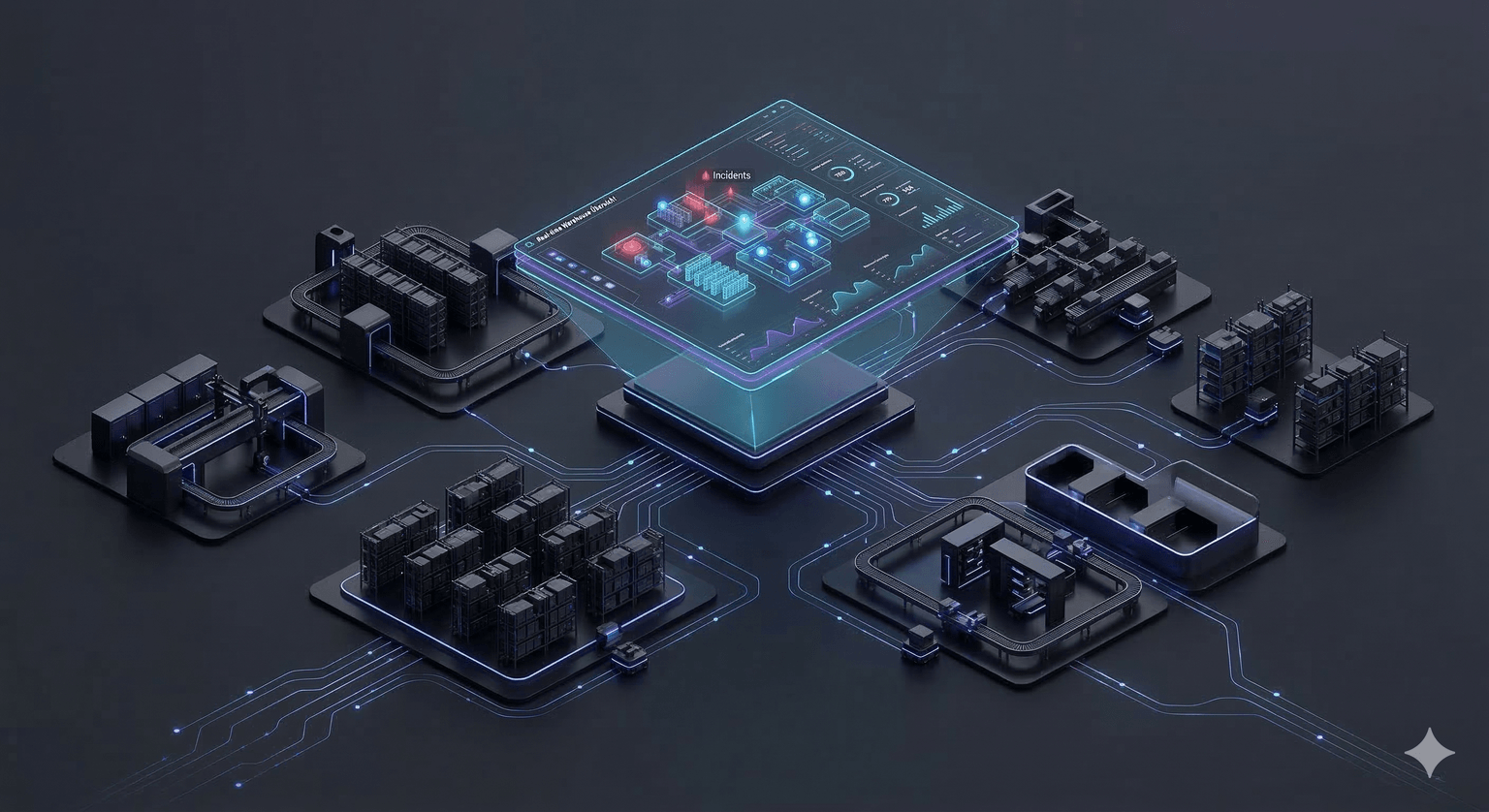
A central entry point for warehouse operations — live data from all systems in one screen, visual layout, incident tracking, and 3D configuration that becomes the actual system config.
Context
A warehouse has many systems — conveyors, robots, storage units — and each comes with its own software and management UI. As a warehouse manager, you have all the information, but it's scattered across different interfaces. You're constantly context-switching between tools just to understand what's happening.
We're building a central entry point: one screen that brings together live data from all these systems, shows the current state, highlights performance issues, and lets you act on incidents without losing context.
What I'm building
I'm building the front end at Element Logic. The core pieces:
- Real-time integration: Pulling live data from multiple warehouse systems and making it available in the UI, alongside a central alarm and incident management layer.
- Visual interface: Everything is spatial. Users see the warehouse layout and can navigate from a visual representation to incident details and back. Much more intuitive than tables and logs.
- 3D configuration: The warehouse is rebuilt in a virtual space — a 3D emulation where you configure the layout visually. This configuration then exports to become the actual system config for the individual components, as well as the basis for the live visualization.
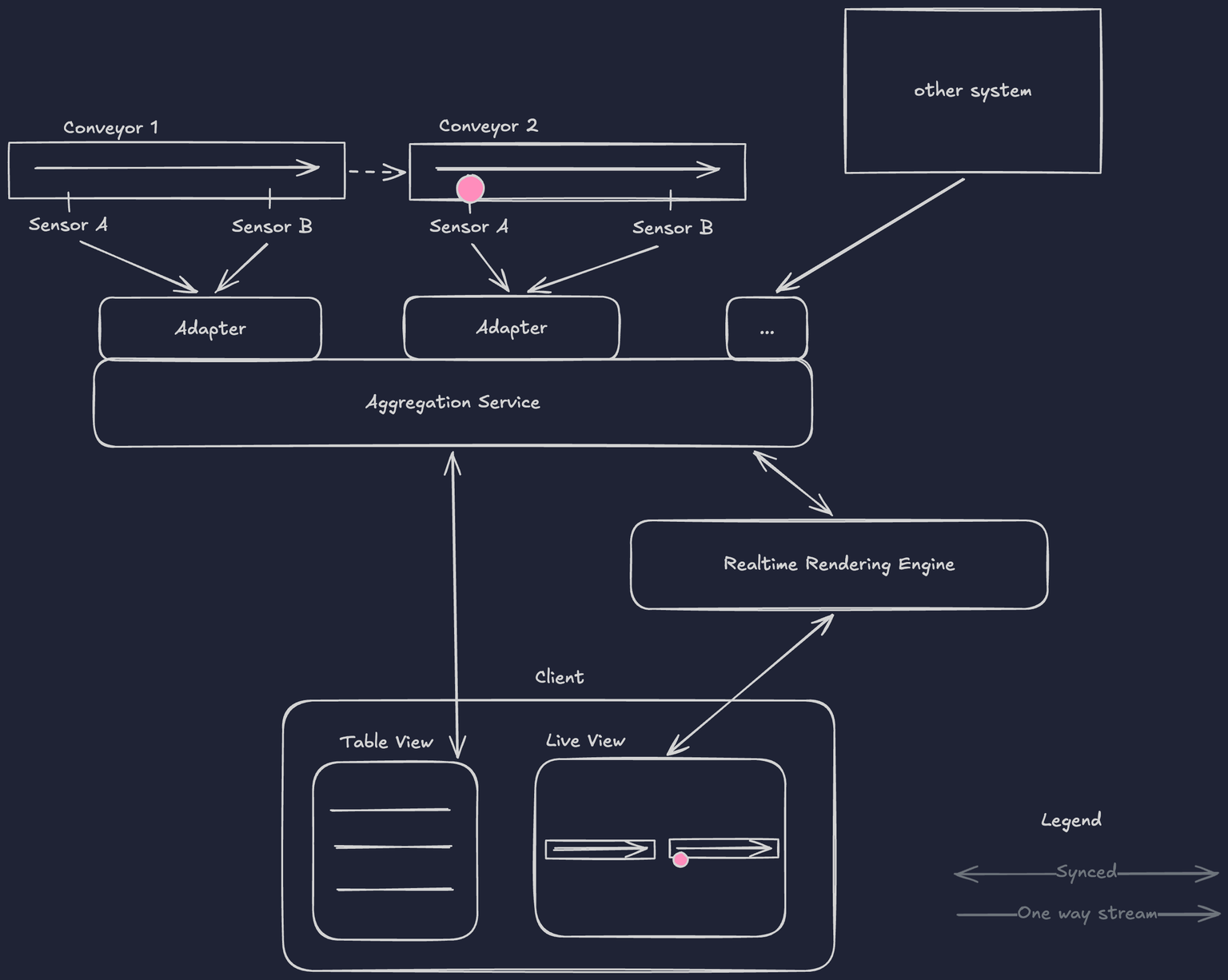
The visual approach helps not just warehouse managers but also the teams doing configuration — no more editing JSON files or digging through databases.
Outcome
In development: one screen that brings together live data from all systems, with visual layout and incident tracking. Building toward a single picture of operations where managers can act without switching tools.
Key Insights
- API definitions and mocks are enough to get started — they unblock parallel work and let you test if the system looks and feels right. But mocks don't replace real integration.
- Integrate early and often. Mocks may hide real problems. A big-bang integration almost always takes four times longer than you estimate; continuous integration surfaces issues while they're still small.
Proof: Internal demos and product walkthroughs on request through Element Logic.
This is my day job. I can share high-level ideas here, but specifics remain confidential until officially published. Detailed discussions are available to prospective Element Logic customers through standard channels.