Thoughts
Building Real-Time Products with Mocks First
Mocks are a speed multiplier early on, but only if you integrate with real systems early and continuously.
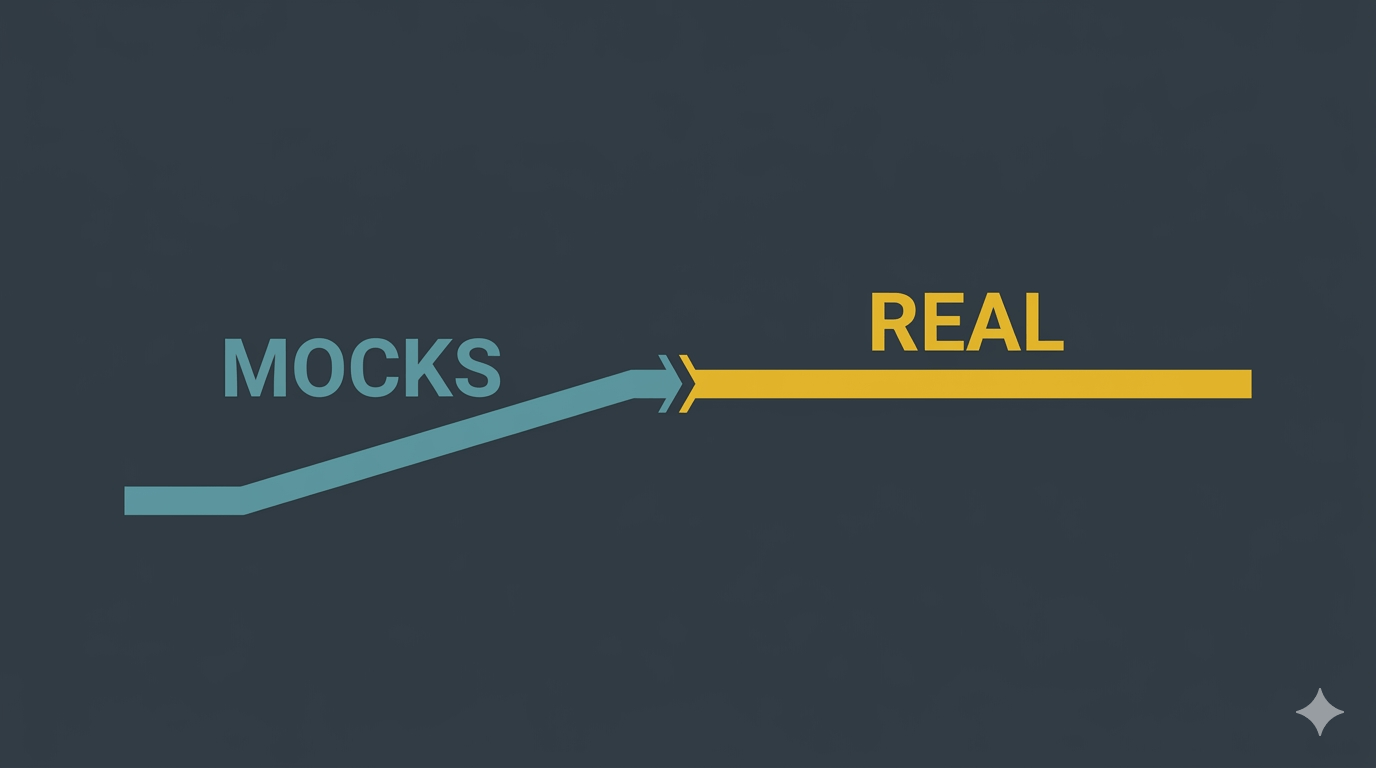
When you're building a real-time product, starting with full integration sounds responsible, but in practice it often slows down everything. Backend blocks frontend, and meaningful integration only starts once all components and systems are ready, so no one can validate whether the product interaction even makes sense yet.
I usually start with API definitions and mocks. That lets the team move in parallel and get a working flow on screen quickly. You can test interaction patterns, layout choices, and incident-handling concepts before all system dependencies are ready.
For warehouse software, this is especially useful because the UX questions are hard: what should be visible by default, what should trigger attention, and how quickly can someone move from "something is wrong" to "I know where and why". Mocks let you answer those questions earlier.
The catch: mocks lie.
They hide timing issues, event ordering problems, data shape drift, and all the sharp edges that appear once real systems are connected. If you wait too long to integrate, you pay that debt with interest.
My practical rule is simple:
- Use mocks to unblock parallel work and validate interaction design fast.
- Integrate with real systems as soon as the first usable workflow exists.
- Keep integration continuous instead of scheduling one big integration phase at the end.
As long as you're pre-production, don't be afraid of breaking changes. Communicate them clearly, but optimize for a better model instead of freezing too early.
I prefer starting with a smaller scoped API, integrating against real usage, and extending it once limitations are visible. Trying to fully define the complete API in the first pass usually bakes in hidden assumptions that later turn out to be wrong.
Big-bang integration almost always takes longer than expected. Continuous integration surfaces issues while they are still small enough to fix without derailing timelines.
Mocks are a great starting tool, not a substitute for reality. Treat them as a temporary accelerator, not a comfort zone.