Thoughts
Quality vs Speed Is a False Tradeoff (If You Pick the Right Constraints)
Teams usually lose both speed and quality when constraints are vague. Clear constraints improve both.
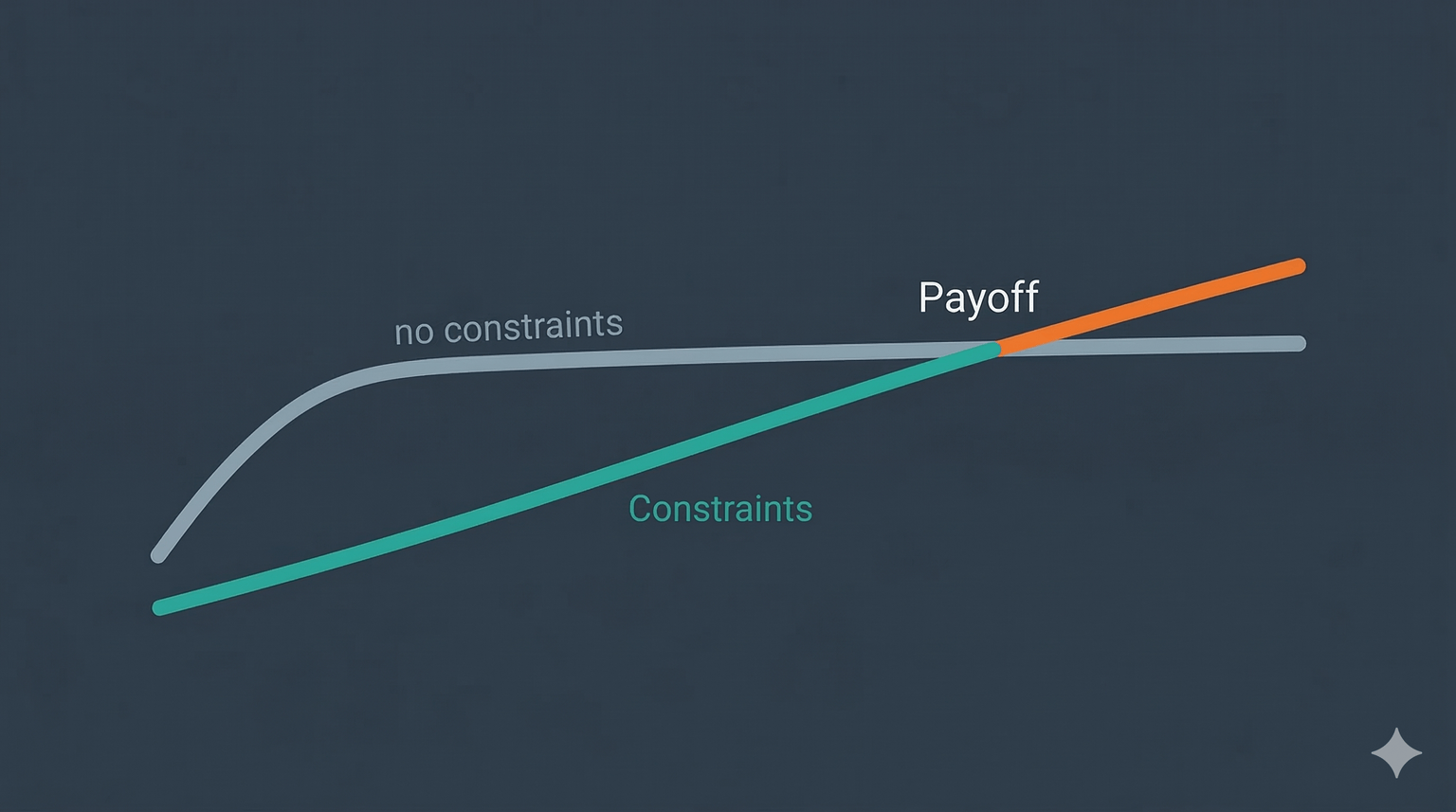
Most teams do not actually decide between speed and quality. They decide between clear constraints and unclear constraints.
When constraints are vague, teams "move fast" by making local decisions that do not fit together. That creates rework, coordination friction, and brittle systems. The result is usually low quality and low speed at the same time.
Why the tradeoff feels real
The tradeoff feels real because teams often mix three different things:
- Core correctness: Does the main workflow behave reliably?
- Surface polish: Is every edge case and UI detail perfect?
- System breadth: How many use cases are covered right now?
If you try to maximize all three at once in early stages, progress collapses.
What actually works
Pick explicit constraints early and communicate them clearly:
- Define the non-negotiable quality floor.
Example: data correctness and incident handling in core workflows. - Constrain scope aggressively.
Build the smallest end-to-end slice that is genuinely useful. - Defer polish where risk is low.
Rough edges are acceptable if they do not compromise trust.
This gives the team permission to move quickly without guessing what "good enough" means.
Practical operating model
I use this sequence:
- Week-level goal: one meaningful workflow, not a feature pile.
- Quality gate: correctness and operability on that workflow.
- Deliberate debt list: what we postpone on purpose.
- Short feedback loop: validate behavior with real usage quickly.
The key is that postponed work is explicit. Hidden debt is dangerous; explicit debt is manageable.
Common failure mode
Teams say "we need to move fast," then quietly lower quality on the core flow instead of narrowing scope.
That is the worst combination:
- broad scope,
- weak correctness,
- slow follow-up cycles.
If speed is the goal, protect the core and cut scope.
A better framing
Do not ask: "speed or quality?"
Ask: "which quality dimensions matter now, and what can wait?"
That framing usually removes most of the conflict. It turns a vague debate into concrete decisions that teams can execute.